When it comes to protecting a yacht’s surface, selecting the right coating is curcial, as the marine environment a yacht is exposed to is not forgiving, being contastly exposed to the UV rays, salt and other contaminants. This is why choosing a protection is important, and choosing the best protection method can extend the longevity and the easthetics of a yacht’s surface (be it paint or gelcoat). But with several protective methods available, how can one decide between traditional waxes, polymer sealants and ceramic coatings? It’s underdtanding the differences that can help yacht owners and/or captains make informed maintenance decisions. Below we talk about the difference between waxes, polymers and ceramic coatings.
Traditional Waxes
For decades, natural carnauba wax has been very popular in yacht maintenance, being used in a lot of products. It provides a warm, glossy finish that enhances the paint’s appearance, offering basic protection. However, wax has limitations:
-Short Lifespan – Typically lasts a few weeks to a couple of months, maximum, requiring frequent reapplication. Actually waxes desapesear by retention which will end up by showing marks here and there. Wax lifes span is very short 60 days aprox
-Limited Protection – Provides minimal resistance to UV rays, salt, and chemicals.<Instable coating
-Low Hydrophobicity – Water doesn’t bead as effectively compared to modern coatings.
The advantage? It makes it look very glossy for the first cupe of weeks making it look very apealing, so it can be useful for short-term shine and quick cosmetic improvements, but for long-term protection? More advanced solutions are recommended.
Polymer Sealants
Polymer sealants are synthetic alternatives to wax, designed to chemically bond with a yacht’s paint or gelcoat, instead of sitting on top of it lik wax does. Are desapearing after 6/9 months by thickness so last longer.
These sealants offer several advantages:
-Longer Durability – Can last between six months to nine months or ven a year, if well maintained, consequently reducing maintenance frequency.
-Stronger UV and Salt Resistance – Protects further against oxidation and environmental damage.
-Higher Hydrophobicity – Water beads off efficiently, reducing staining and making cleaning easier.
-Easy Application – Can be applied by hand or machine without specialized equipment.
Polymer sealants provide an excellent balance of protection and ease of use, making them a preferred choice for yacht crews who need reliable and effective surface protection.
Ceramic Coatings
Ceramic coatings are the most advanced protective solution available in the market today. Composed of silicon dioxide (SiO₂) or other nanoceramic compounds, these coatings form a semi-permanent bond with the yacht’s surface, creating an durable protective layer. Benefits include:
-Extreme Longevity – Can last from two to ten years with proper maintenance.
-Superior UV and Chemical Resistance – Provides exceptional defense against oxidation, fading, and harsh environmental contaminants.
-Enhanced Hardness – Creates a tough, scratch-resistant barrier.
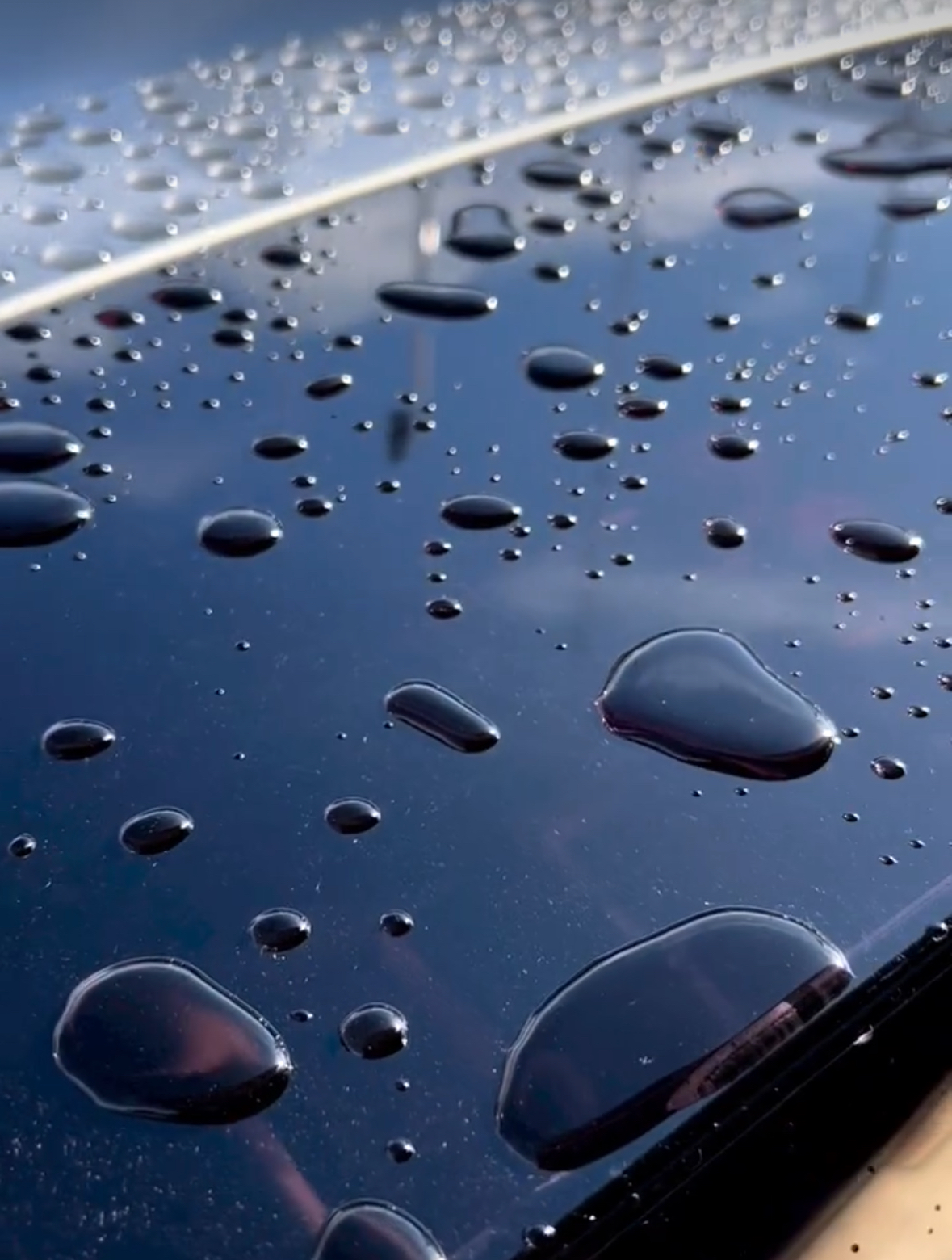
-High Hydrophobicity & self-cleaning effect – Repels water and dirt, making maintenance significantly easier. This can be very appealing for bigger yachts where maintenance acess is harder to perform.
While ceramic coatings offer the best protection, their application requires meticulous surface preparation and professional expertise. Once applied, they drastically reduce the need for frequent maintenance while keeping the yacht’s finish in top condition. However, this does not mean maintenance should be neglected—rather, it becomes much easier. The downside? You might increase tha yacht’s water usage and expense as you may find yourself hypnicised by the incredible water repellency, potentially spending hours watching water bead and roll off the surface.
Which one should you choose?
The best coating depends on your yacht’s needs and how much effort you want to invest in maintenance:
If you need a quick shine for a short period, wax may be sufficient.
If you want long-lasting protection with minimal effort, a polymer sealant is a great choice.
If you seek shine, maximum durability and performance, ceramic coatings provide unmatched benefits.
Understanding these differences ensures that your yacht remains protected against the elements while looking its best. Investing in the right coating solution not only preserves the paintwork but also enhances resale value and reduces long-term maintenance costs, plus protecting the environment!
Do you have questions about which coating is best for your yacht? Let’s discuss!