
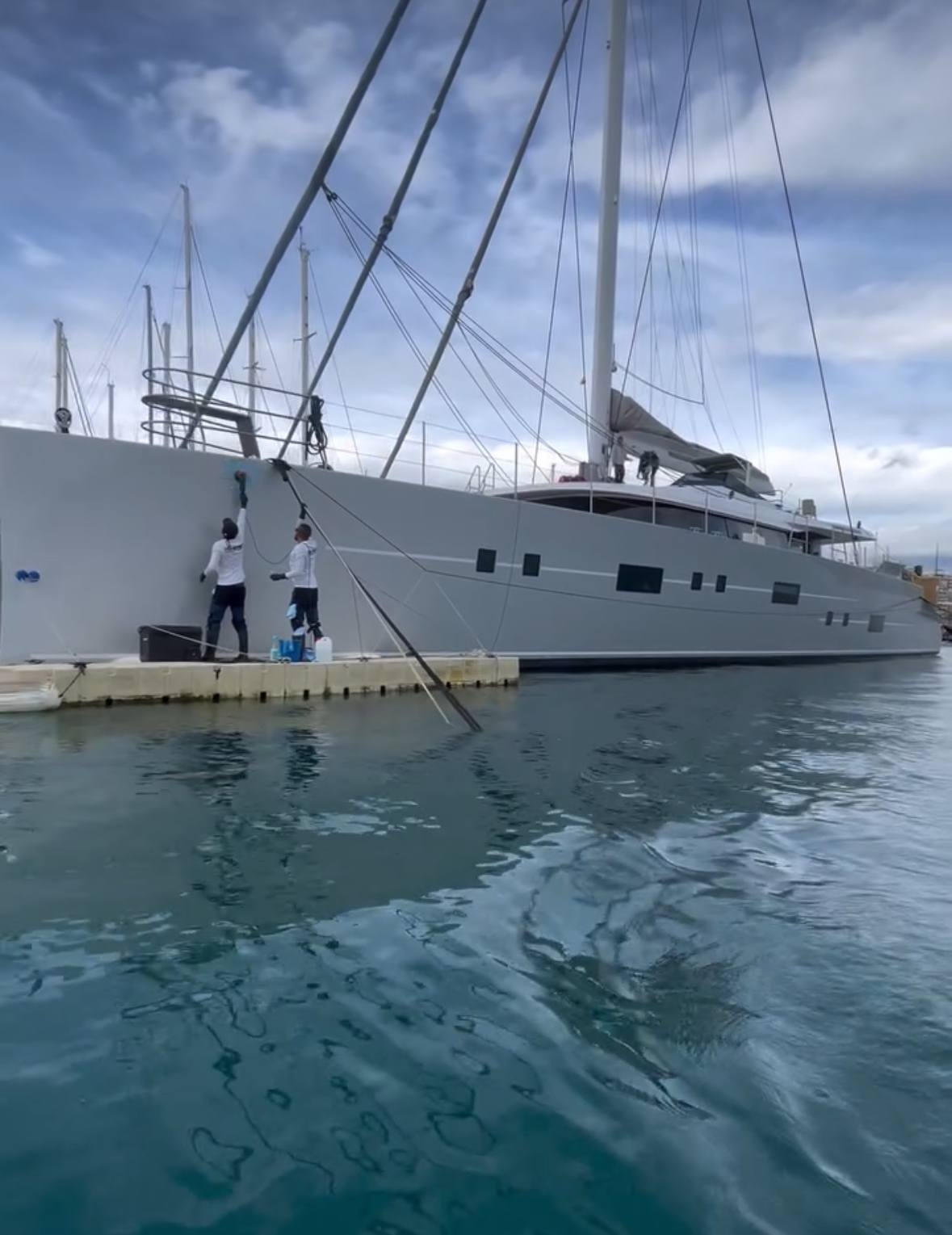
We see yachts, and we see different colours, which to the eye of a normal person might look like the same kind of surfaces, just different colours and finishes such as glossy, sparkly, or matte. But no, there are different types of paint and GRP, and choosing what type of paint will involve choosing the right care with some and avoid some with others.
So, the choice of paint on a yacht isn’t just about aesthetics—it’s about durability, protection, and long-term maintenance. Understanding the differences between polyurethane paint, acrylic paint and gelcoat is crucial for proper care and longevity. Below we discuss a little bit about each one and which care you should take and what mistakes to avoid.
POLYURETHANE PAINT
Polyurethane paints use polyurethane resin as its main component. Because of its easy application, versatily and durabilty and glossy finish it makes it the most common choice for modern yachts. Polyurethane’s paint is 150/215 micron thickness.
Care Tips:
– Regularly wash with a pH-neutral shampoo to prevent surface degradation.
– Avoid harsh abrasives that can dull the finish.
– Apply polymer sealants or ceramic coatings for added protection. Ideally protection should be added from the start 20 days after the initial paint job.
– Do not polish with any compounds, just use a strong soap in case of any heavy dirt residue.
– This type of paint is, usually, only poshible when the paint is more than 4 years old if it needs to restore the gloss.
Common Mistakes to Avoid:
– Using cheap, aggressive cleaners that strip protective coatings.
– Polyurethane paint is not recommended to be polished.
– If you polish, do not over- do it, which can wear down the natural clear coat of uniclor paint systems.
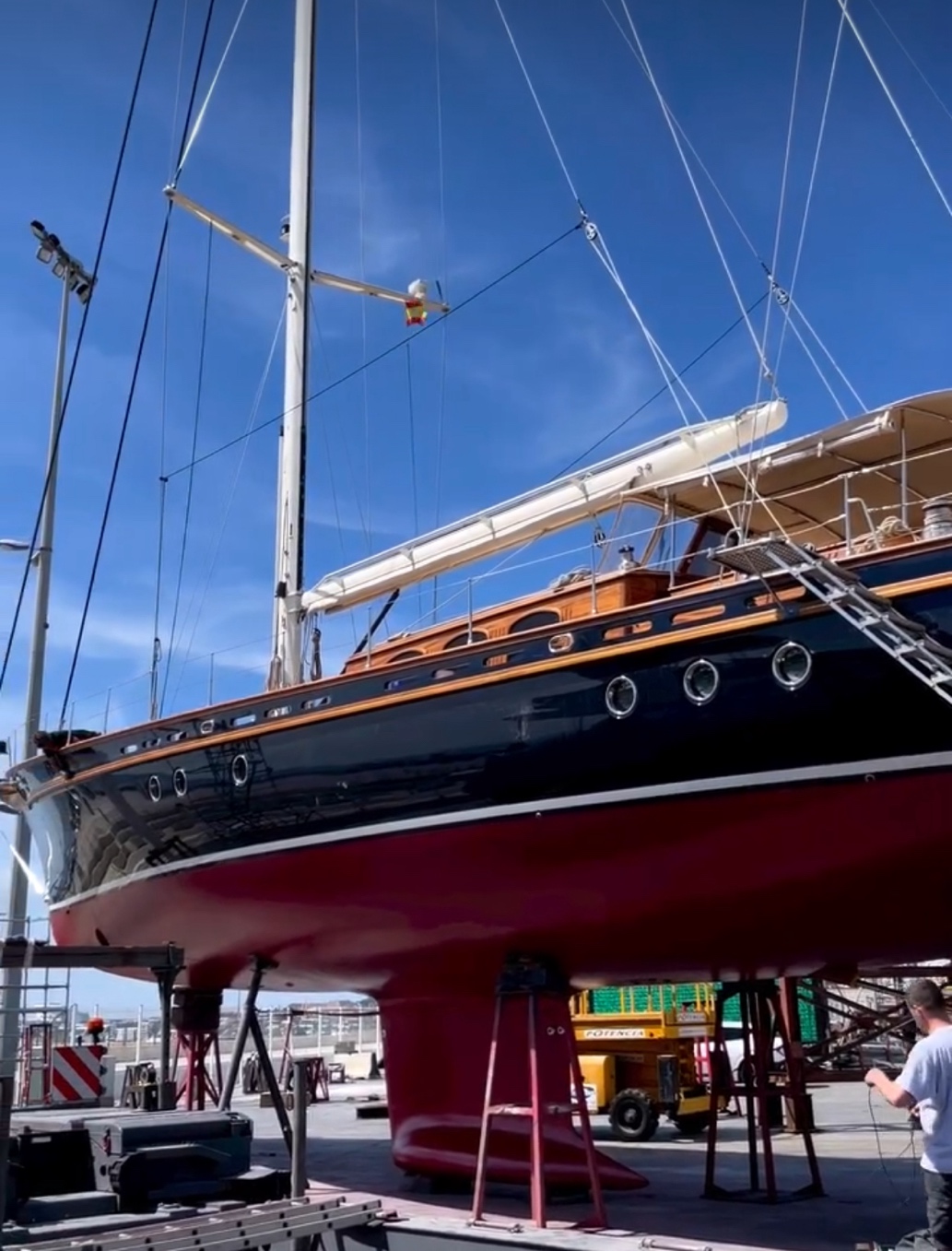
ACRYLIC PAINT
Acrylic paint is a fast-drying coating made of pigment suspended in an acrylic polymer emulsion, along with plasticizers, silicone oils, defoamers, and stabilizers. Most acrylic paints are water-based but become water-resistant once dry.
Acrylic finishes are highly glossy but tend to develop micro-scratches. These can typically be corrected with a fine rubbing compound or a polymer emulsion.
While acrylic paint is less common on high-end yachts, it is sometimes used due to its ease of application and quick drying time. It is also more flexible than polyurethane. A simple way to identify an acrylic-painted surface is by pressing a fingernail into it—if a mark remains, it is most likely acrylic paint.
Acrylic coatings typically have a thickness of 400 to 600 microns. Unlike polyurethane, acrylic paint is more polishable, which is one of its key advantages.
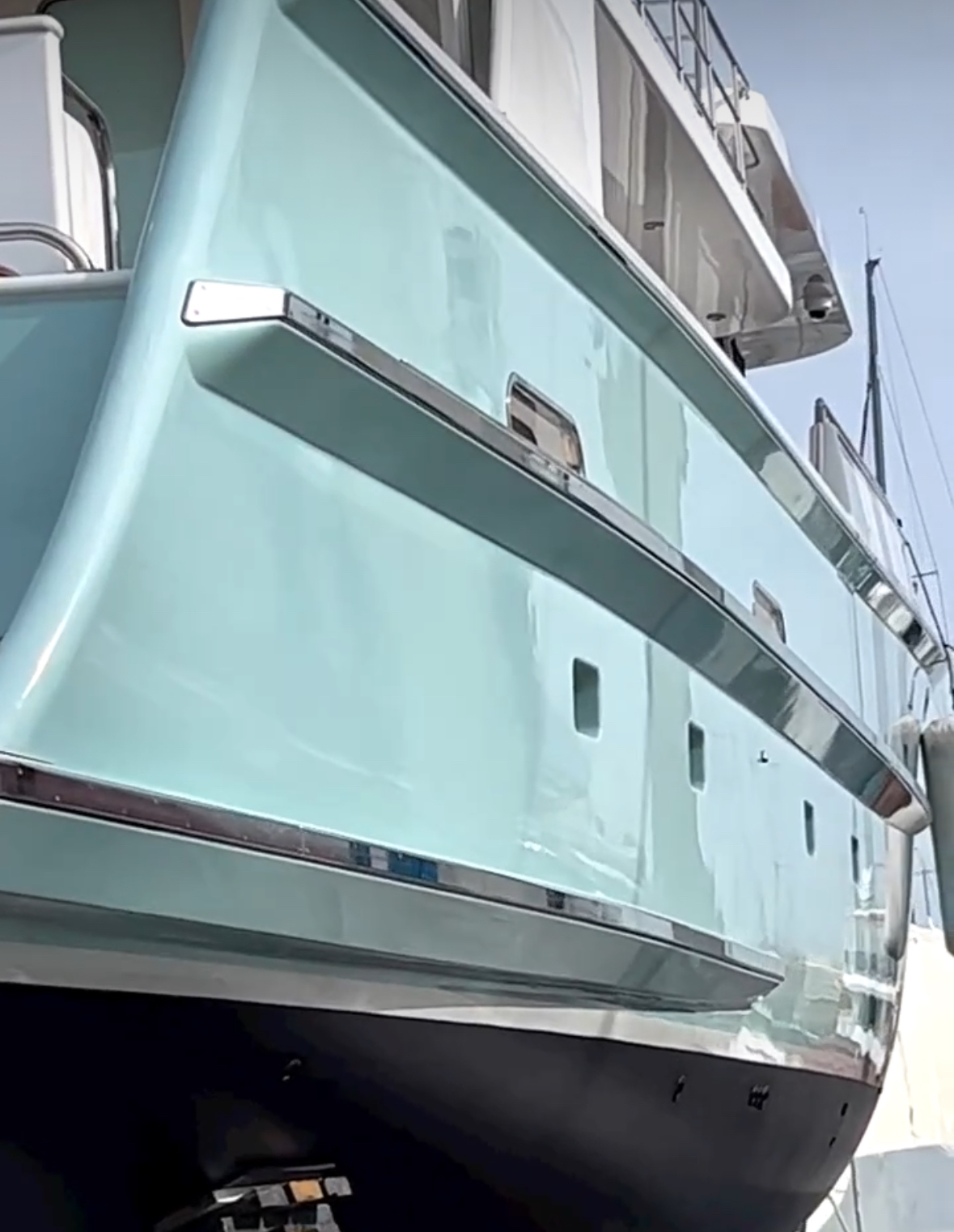
Care Tips:
– Use mild soap and water for cleaning—acrylic is more prone to oxidation.
– Protect with wax or polymer sealants to extend longevity.
– Do not apply ceramic coatings to acrylic paint, as acrylic is a soft coating. Applying a hard ceramic layer on top is ineffective—the ceramic will not remain stable, and over time, unusual marks may appear, especially on dark-colored finishes.
– Avoid prolonged exposure to solvents and harsh chemicals.
– Do not use cheap or thin microfibers, as they will scratch the substrate.
Common Mistakes to Avoid:
– Ignoring regular maintenance—acrylic fades faster than polyurethane.
– Using strong solvents, which can break down the paint.
– Thinking that applying a ceramic coating will fix the substrate.
– Using harsh brushes.
– Low-density microfiber cloths can scratch the surface. Always use a chamois or high-density, ultra-soft microfiber cloths for safe application.
GELCOAT
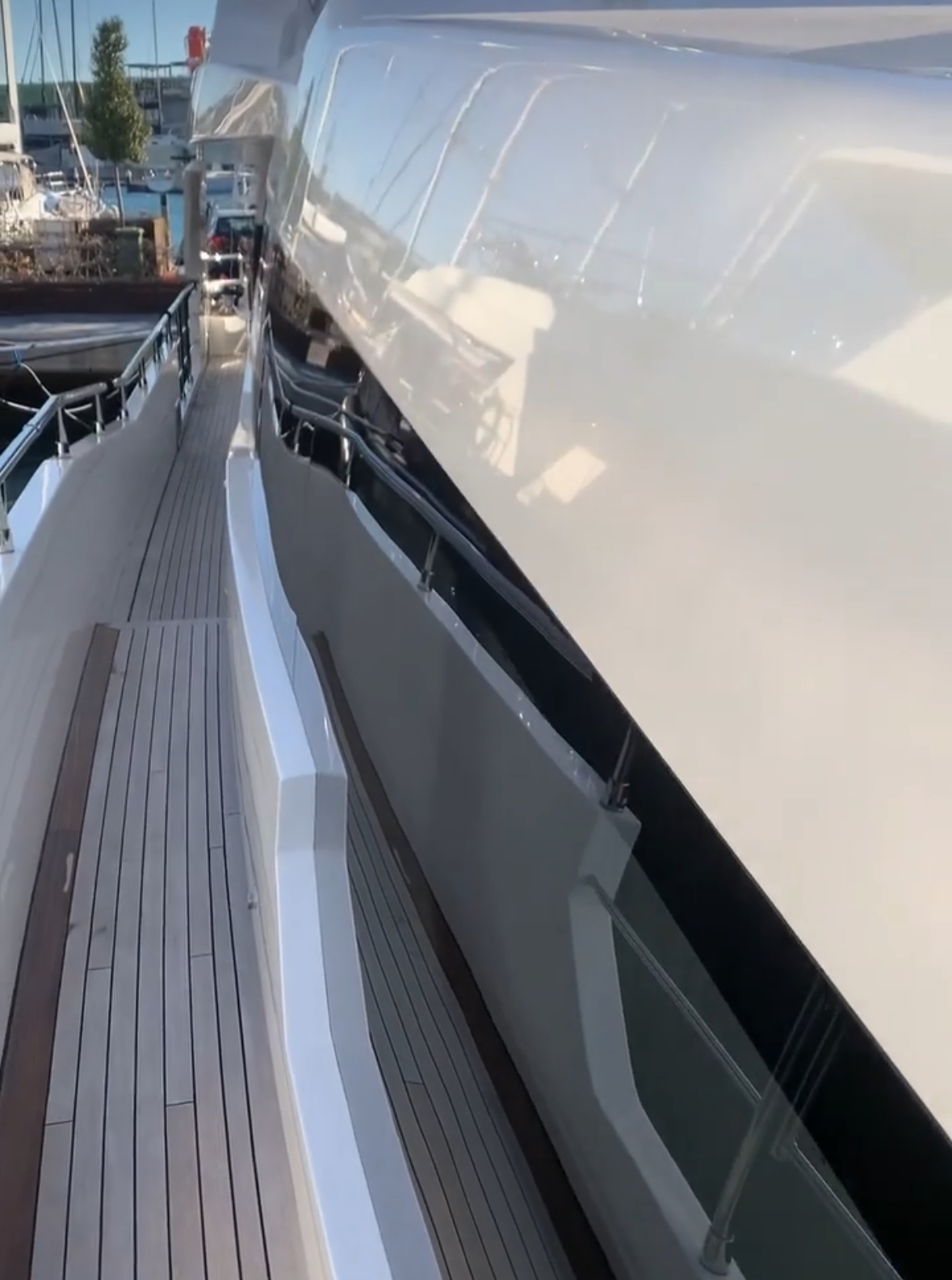
Unlike paint, gelcoat is a resin-based coating applied to fiberglass hulls. It provides a smooth, glossy finish but is more porous and prone to oxidation. However, with proper maintenance, it can last for decades—typically 20 to 30 years.
The thickness of gelcoat ranges from approximately 2 to 5 mm, making it about 20 times thicker than polyurethane.
Care Tips:
– Frequent washing prevents dirt from embedding in the porous surface.
– Regularly polish and apply wax or polymer sealant to maintain gloss and protection. This is a must as gelcoat is a porous material. Waxing, and or sealing, in general preserve of humidity penetration in the fibreglass.
-Always use a chamois with water and vinegar to clean.
– Faded gelcoat, especially on dark colors, cannot be restored. Once the surface has deteriorated and turned white, it must be repainted or re-gelcoated. When it’s damaged, it’s permanent.
When it comes to sanding, polishing, and repairs, gelcoat is a great material to work with—easy to maintain and restore.
Common Mistakes to Avoid:
– Letting oxidation build up—once dull, restoration becomes more labor-intensive.
– Avoid using strong acids to clean stanchions, as they can leave permanent streak marks on the gelcoat.
Final Thoughts
Each paint type requires tailored maintenance to preserve its appearance and protection. Understanding your yacht’s finish and using the right cleaning and protection products will keep it looking pristine while extending its lifespan.
Want to learn more about yacht care best practices? Get in touch with iShine Coatings Group.


