When it comes to yacht maintenance and repainting, proper surface preparation is just as important as the quality of the new paint itself. One key challenge in this process is removing old ceramic coatings, which are designed to provide long-term protection against oxidation, UV damage, and marine contaminants. However, when it’s time to repaint, these coatings must be completely removed to ensure proper adhesion of the new paint.
This is where ceramic coating gel removers come into play—specialized chemical solutions that make the removal process more efficient and effective.
What is a ceramic coating Gel Remover?
A ceramic coating gel remover is a high-strength chemical stripping agent specifically formulated to dissolve and break down the hard, protective layer of ceramic coatings. Unlike mechanical sanding or abrasive techniques, which can damage the underlying paint or gelcoat, a gel remover works by softening and loosening the ceramic layer, allowing it to be completely removed off by rinsing it away.
Most ceramic coatings are engineered to be extremely hydrophobic, chemical-resistant, and durable, meaning traditional cleaning or polishing methods are not enough to remove them effectively. This is why a dedicated gel remover is essential before repainting or applying a new protective coating.
What Is It Used For?
A ceramic coating gel remover is primarily used in yacht refit, maintenance, and repainting projects. It serves several critical functions, including:
Removing Old Ceramic Coatings
Ceramic coatings provide exceptional protection, but over time, they can degrade or become uneven. Before a new paint job or coating application, every trace of the old ceramic layer must be eliminated to prevent adhesion issues.
Prepping the Surface for a Fresh Paint System
If a yacht is being repainted, the surface must be completely clean and free of contaminants. Any leftover ceramic coating can interfere with the bonding of the new primer and paint, leading to potential failures such as peeling, bubbling, or uneven coverage.
Avoiding Excessive Abrasion and Sanding
While mechanical sanding is an option for removing ceramic coatings, it has drawbacks—it can wear down the existing paint or gelcoat unnecessarily, leading to thinner layers that might require extra repair work. A gel remover reduces the need for excessive sanding, making the process more efficient and less damaging.
Restoring a clean, bondable surface
Even if a yacht isn’t being repainted, a ceramic coating gel remover can be used to strip old, failing ceramic coatings before reapplying a fresh protective layer, such as a polymer sealant or a new ceramic coating.
If your yacht has been treated with a ceramic coating and you plan to have it repainted, it is essential to ensure that the company handling the repainting has a gel remover to properly strip the coating beforehand. This step is crucial for ensuring proper paint adhesion. The removal process can be done either by the company or the crew, but if the crew is responsible, you must make sure the company provides you and the crew with the proper guidance on how to apply the gel remover correctly. This brings us to the following explanation.
What to Know Before Applying It
Before using a ceramic coating gel remover, consider the following:
Surface Compatibility – Ensure the remover is safe for the yacht’s existing paint or gelcoat. Some removers may be too aggressive if left for too long.
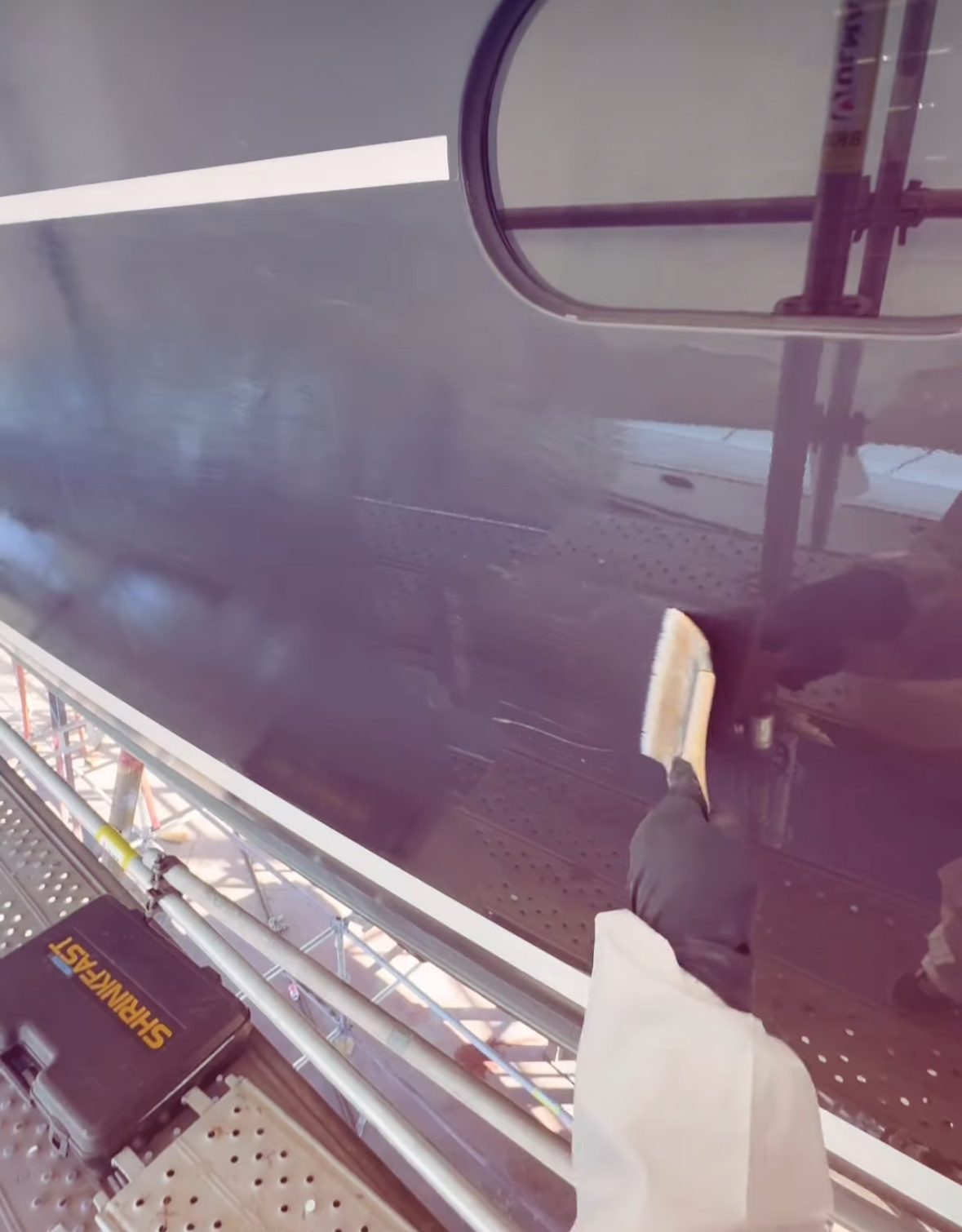
Application Method – Apply the gel evenly using a brush. Allow it to set for at least 24 hours before gently removing the softened coating.
Safety Precautions – Wear gloves, protective eyewear, and ensure proper ventilation when working with chemical removers.
So, make sure you have all the necessary information before applying a ceramic coating to your yacht to ensure it can be properly removed by the right company using the correct product when the time comes. For more information get in touch with iShine Coatings Group at info@ishiencoatings.com.